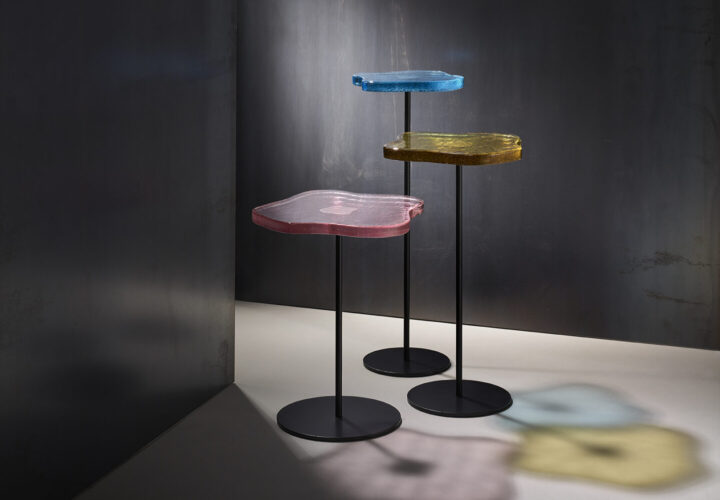

The Memphis style has stirred up spirited debate since its inception. Its bold geometricity and chromatic combinations continue to divide audiences today, as it crops up in various contemporary permutations. The movement kicked off in Milan on the evening of 11th December 1980. Ettore Sottsass gathered a group of young designers and architects to consider the future of their field. They were interested in what could follow the Modernist style which pervaded the day, looking to mould what came next. Three months later they reconvened with over 100 drawings in-hand. The name ‘Memphis’ was borrowed from Bob Dylan’s song, ‘Stuck Inside of Mobile with the Memphis Blues Again’, which played on repeat at their first meeting. The name, which refers to the city in Tennessee as well as the original ancient Egyptian capital, has an air of ambiguity which felt right for their project. It represented their mercurial visions well and left room for ideas to flourish in new forms over time.
The group was composed of many bright minds hailing from across the globe, including Matteo Thun, Martine Bedin, and Shiro Kuramata. They came together in a spirit of whimsicality and, above all, newness. What emerged was a style defined by its geometric forms, bombastic patterns, and punchy colour palettes. The movement extended across disciplines, peppering the culture of their time with a heady jolt of energy. Sottsass left the group in 1985 to focus on his own design practice, and those remaining disbanded two years thereafter. Be that as it may, we can still feel the effects today, as the Memphis style metamorphoses into contemporary expressions. Read on for a whistle-stop tour through the legacy of this potent ‘80s design style…

Memphis style interior, with furniture designed by members of the group
The Memphis style of interior design is perhaps most poignantly summed up by Bertrand Pellegrin as “a shotgun wedding between Bauhaus and Fischer-Price”. There is, admittedly, some credence to his words – although, when managed with restraint, it can deliver a welcome hit of jubilance to an interior. Contemporary applications, such as the example below, demonstrate a certain ‘cool factor’ which can be achieved by combining distinctive materials in the form of ‘art furniture’. Designs like Ettore Sottsass’ popular ‘Ultrafragola’ mirror are enough to set a playful tone without tipping over the edge into full-blown Memphis exuberance. An excellent example of an interior designer who’s doing it well today is Dorothée Meilichzon of Experimental Group fame. Her interiors in the hospitality space are a masterclass in a sort of neo-Memphis approach to design which strikes a refreshingly current chord.
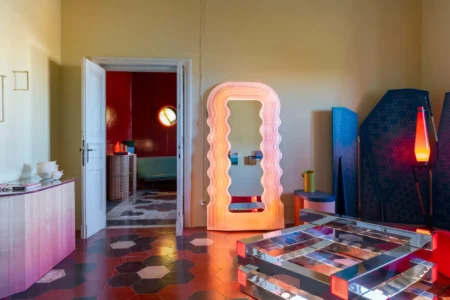
Contemporary Memphis style interior featuring the ‘Ultrafragola’ mirror by Ettore Sottsass

‘Carlton’ room divider by Ettore Sottsass, 1981
This Postmodern design movement relies on eclectic combinations of materials, textures, colours, and patterns. Terrazzo and plastic laminate show up often in Memphis style furniture. The forms which emerge are typically quite schematic, combining simple shapes to produce pieces with a blocky, almost naïve quality. There’s an abstract, asymmetrical element to many Memphis designs. Other examples, like Ettore Sottsass’ ‘Carlton’ room divider, harness absolute symmetry to take on an air of monumentality. The same is true of Michael Graves’ ‘Plaza’ dressing table and stool, which stacks shapes to create a tower of diverse materials. These designs are all, however, united in their eye-catching quality, emanating a bold and novel sensibility.

‘Plaza’ dressing table and stool by Michael Graves, 1981
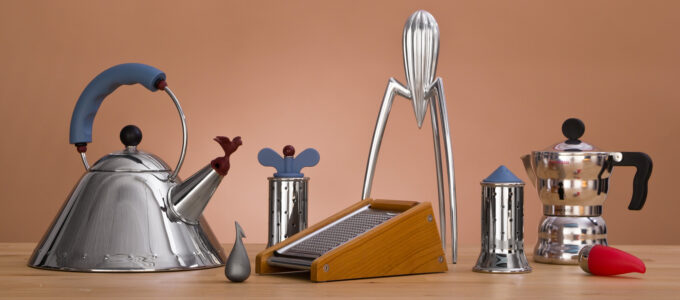
Kettle, pepper grinder, and saltshaker product designs by Michael Graves for Alessi, c. 1985
The Memphis movement extended all the way down to quotidian touchpoints like kitchen utensils and household necessities. Michael Graves’ work for the Italian homeware brand, Alessi showcases the style particularly well. He applied exaggerated forms and colourful ornamentation to bring a joyful lift to the kitchen. Memphis style products are designs which don’t take themselves too seriously. They often come with a wink and a cherry on top, just for fun.
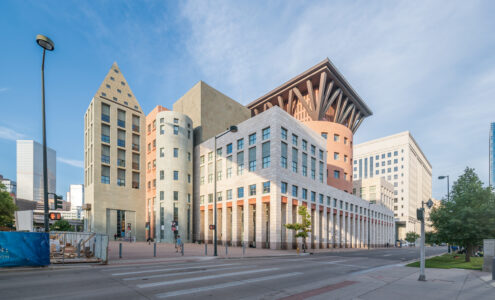
Denver Central Library designed by Michael Graves, 1996; photographed by Maciek Lulko
Geometricity is something of a throughline in Memphis design, extending to the group’s architectural contributions. Most examples are similar to smaller scale Memphis creations in their stacking and melding of mixed media. What emerges often takes on the quality of a funhouse, pared back just enough to work in institutional applications. Michael Graves’ Denver Central Library demonstrates what that can look like, from the asymmetrical composition down to the varied hues.

Untitled, 2002-3 (left) + ‘Ancora un bicchiere’, 2010 (right) by Nathalie Du Pasquier; photographed by Annabel Colterjohn
Like many design movements, Memphis trickled across disciplines and into more mainstream culture. It showed up in art, with the French artist, Nathalie Du Pasquier being one of its most famous contributors. We can see elements of the style in graphic design of that era, with contemporary takes emerging more recently as well. In the late 2010s many start-ups reimagined Memphis style graphical elements like flatness, geometricity, and solid colour blocks to convey their brands to the public. Wired magazine dubbed this ‘corporate Memphis’, and we still see signs of it today.
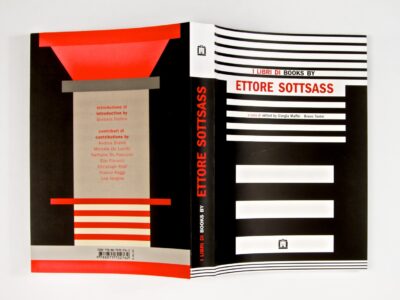
Example of Memphis style graphic design; photographed by Pietro
This quintessentially ‘80s style rippled out into fashion as well. In fact, couturier, Marco Zanini was a founding member of the Memphis Group. He’s best remembered as the Creative Director of Schiaparelli, who revived the fashion house in 2014 following its closure in the ‘50s. References to the style were also prominent in the collections and fashion shows of Dior and Missoni as recently as the 2010s. The late great Karl Lagerfeld was even among the largest collectors of Memphis designs. David Bowie was also a major collector of the style, and we can spot elements of his taste for it extending back to the ‘70s, as exemplified in his famous Aladdin Sane album cover. So, although at times polarising, we’d be remiss in writing the Memphis style off as a relic of the excessive tastes of the ‘80s. With the likes of Lagerfeld and Bowie to vouch for it, we can be sure there’s something of lasting cultural value there.

David Bowie’s ‘Aladdin Sane’ cover art, designed by Duffy and Celia Philo, 1973
Memphis round coffee table finished in ‘Rose Pewter’
The Tom Faulkner design sensibility is, on the whole, quite removed from the core principles of the Memphis style. However, there’s something to be said for knowing our design history so that a wealth of references may enrich our contemporary practice. Our popular Memphis coffee table bears the name of this influential moment in design. It’s articulated in slim lines which coalesce to produce an elegant form in refined materials. It is, however, a tip of the hat to what came before. In its creation, we aim to embody the same pioneering spirit which compelled the Memphis Group to take bold swings in the name of propelling design into fresh new territories.
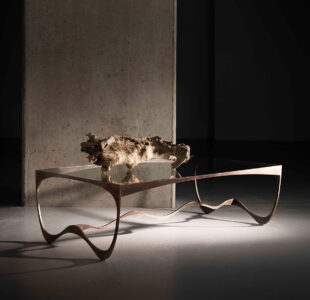
Memphis rectangular coffee table finished in ‘Rose Pewter’
Text by Annabel Colterjohn