Glass has become such a ubiquitous material that its rare we take a moment to appreciate its alchemical wonder. It’s a functional touchpoint of the everyday which supports our routines in so many ways. Oftentimes its utility is surpassed by its beauty, crossing into the worlds of art and design. It’s one of our favourite materials to combine with our metal furniture, connecting us not only to contemporary tastes but also a long and fascinating history. Glassmaking as a practice has crossed cultures and millennia, taking countless forms along the way. Join us for a brief wander through the history of glassmaking and a look at exactly how this distinctive material takes shape.

Californian sea glass
Glass is not only a manmade material but also one formed by the elements. It’s created by some of nature’s greatest displays of power, like volcanic eruptions, meteorite impacts, and lightning strikes. What’s left in their wake are distinctive forms of glass such as obsidian, which takes on an inky black colouration with a glossy, glinting surface. Mankind eventually intervened, finding ways to produce glass in a controlled, considered manner. There are a few tales of exactly how the recipe was discovered, perhaps most intriguing among them being the legend of the Phoenician sailors. The Roman historian, Pliny the Elder recounted the story in the first century AD. He told of a cargo ship carrying a soda compound called natron and its sailors, who took refuge on a Syrian beach one night. In the absence of stones to prop up their cooking pots, they used hunks of natron instead. When exposed to heat, the compound melted and mingled with the sand, forming a molten glass which then cooled into form.
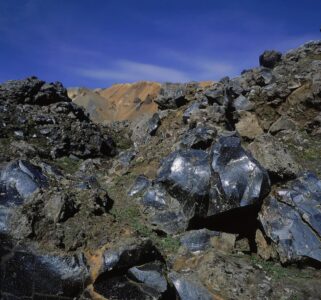
Obsidian deposits
While the legend gets the process itself right, the true origins of glassmaking are now believed to date much further back. Archaeological evidence points to beads and glazes being produced in Mesopotamia and Egypt as long ago as 3500 BC. From here, the practice likely evolved, taking cues from other crafts which harnessed heat like ceramic work and metallurgy.

Durdle Door Beach in Dorset
This ancient practice was refined and expanded upon over time, with the migration of skilled artisans informing its evolution. What began in the Middle East found strong footholds in places like Venice, which continues to produce beautiful specimens of glass to great acclaim. We in the UK are also quite lucky to have some of the best beaches in the world to source pure sand for glassmaking. Devon and Dorset, on the other hand, are famous for their sea glass, which peppers the shores in countless colours.
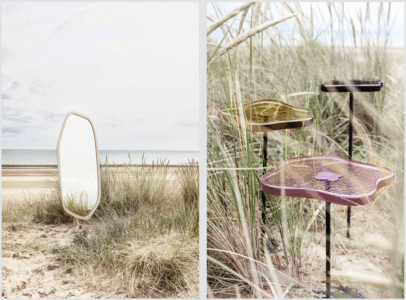
Cloud cheval mirror (left) + Lily cocktail tables (right) on Camber Sands
Ever true to our British roots, we always endeavour to connect our furniture designs to a certain sense of place and heritage. We apply various expressions of glass to objects like cocktail tables and metal-framed mirrors, finding they introduce a fresh quality in each of their forms.
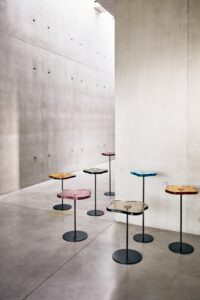
Lily cocktail tables with Venetian glass tops
Our contemporary furniture pairs wonderfully with more vibrant takes on glass. Hand-cast Venetian glass carries a beautiful dappled quality, which comes alive in a cast of colours. Smoked glass has a warmth to it, with tobacco tones infused into the material to smooth and mellow effect.
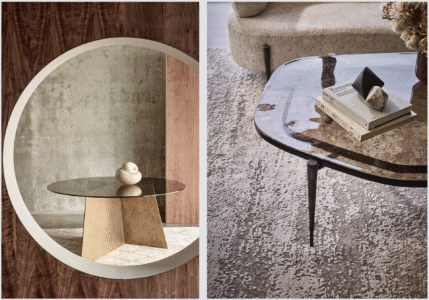
Edge round dining table with a smoked glass top (left) + Cloud coffee table with a ‘Smoke’ Venetian glass top (right)
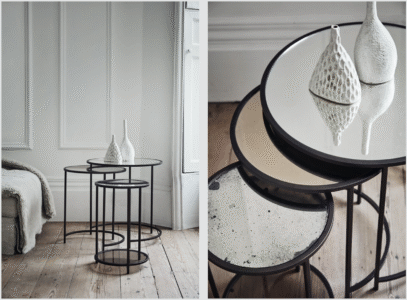
Lexington nest side tables with antiqued mirror and verre églomisé tops
Our antiqued glass options bring an added depth of character to our designs. We’re able to reproduce the look of aged glass and mirror, evoking a foxed quality and even fossilised effects. It works exceptionally well across our mirrors as well as on consoles and coffee tables, for example. We also work with verre églomisé, whereby gold or silver leaf typically is applied beneath the glass’ surface, forming a subtle grid pattern with a soft luminosity. These expressions of antiqued glass bring a distinctive appeal to our modern furniture, attracting the eye in any environment.
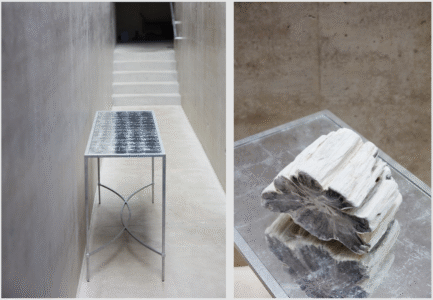
Hanover console with a verre églomisé top
We offer a host of glass options among our finishes and materials, creating the opportunity to customise our collection. It’s well worth exploring the many colourations, effects, and forms available to strike the perfect balance. Should you like a bit of guidance, or to discuss further bespoke options, please do get in touch and it will be our pleasure to help.
Text by Annabel Colterjohn